

Introduction:
Sourcing products from China can be a game-changer for your business. It offers cost advantages, access to advanced manufacturing, and a vast supplier network. However, for many international buyers, the process can also be filled with pitfalls. Over the years, we’ve seen the same mistakes repeated by businesses of all sizes. Avoiding these common errors can save you thousands of dollars, protect your brand reputation, and ensure a smooth supply chain.
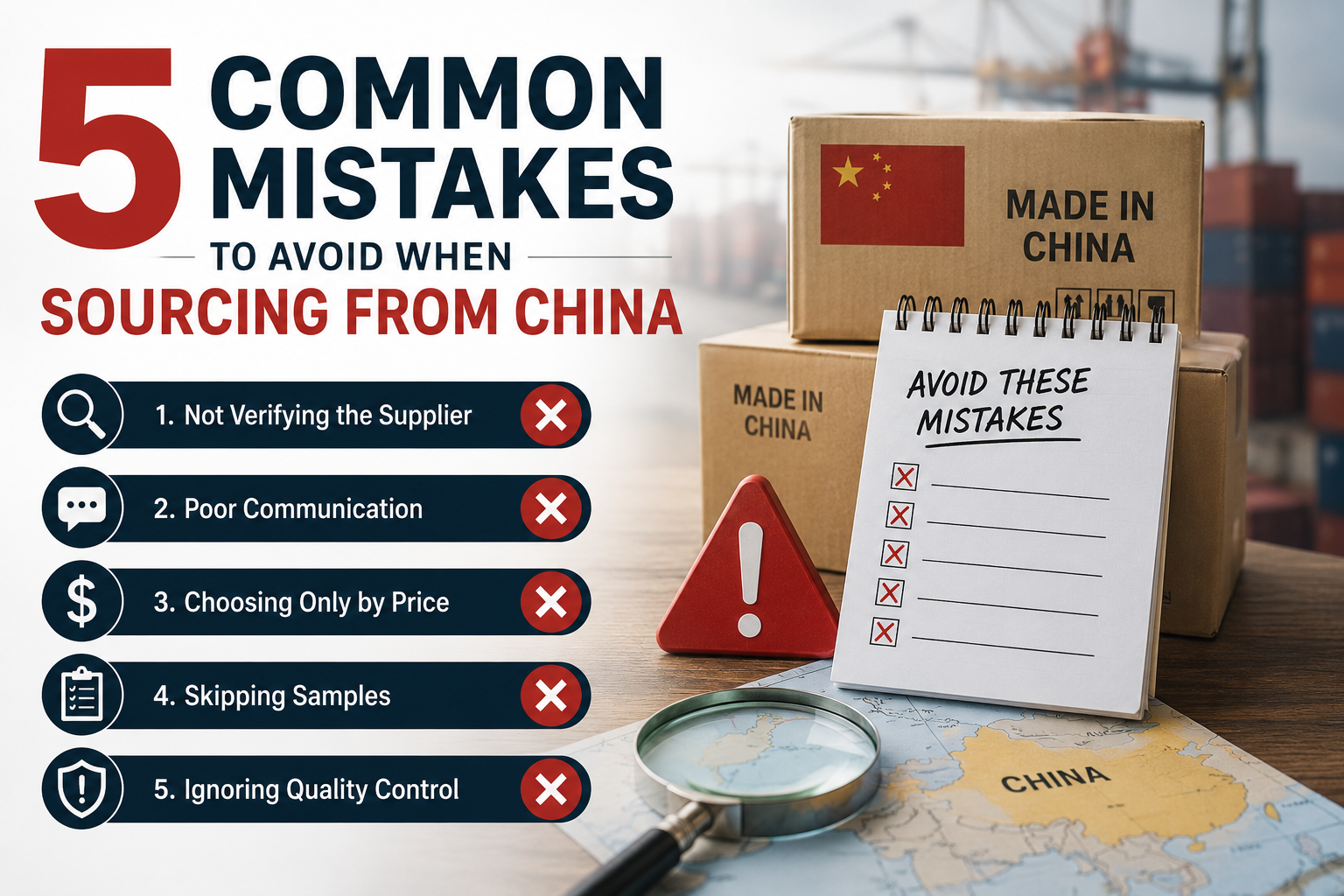
Here are the 5 most common mistakes to avoid when sourcing from China.
Mistake 1: Not Verifying the Supplier’s Credentials
One of the biggest mistakes buyers make is taking a supplier at face value. A professional website and a well-written email do not guarantee a legitimate factory. Many overseas buyers have fallen victim to scammers who pose as manufacturers but are actually middlemen or, worse, fraudsters.
How to avoid it:
- Always request a copy of the supplier’s business license.
- Cross-check the company name with their bank account details to ensure they match.
- Use third-party platforms to verify their registration and operational history.
- If possible, request a video call to see their facility in real-time.
Mistake 2: Focusing Only on Price
It is natural to want the best deal, but making price your only consideration is a dangerous game. The cheapest supplier is rarely the best choice. Low prices often indicate poor quality materials, rushed production, or substandard working conditions. This can lead to product defects, shipment delays, and ultimately, unhappy customers.
How to avoid it:
- Look beyond price and evaluate the supplier’s overall value proposition.
- Ask for detailed product specifications and material breakdowns.
- Request samples to test the quality before committing to a bulk order.
- Compare quotes from multiple suppliers, but also compare their responsiveness and professionalism.
Mistake 3: Skipping the Sample Process
Some buyers, eager to save time or money, place large orders without ever seeing a physical sample. This is a recipe for disaster. A product that looks good in a photo can be completely different in terms of material, finish, and functionality once it arrives at your warehouse.
How to avoid it:
- Always request pre-production samples.
- Test samples thoroughly for quality, durability, and design accuracy.
- If possible, request production samples from the actual production line.
- Never approve a bulk order until you are fully satisfied with the sample quality.
Mistake 4: Overlooking Intellectual Property Protection
China has made significant progress in intellectual property (IP) protection, but risks still exist. If you have a unique product design or brand, failing to protect it can result in copycats flooding the market with cheaper imitations.
How to avoid it:
- Register your trademark and patents in China before sharing your designs with suppliers.
- Sign clear non-disclosure agreements (NDAs) with potential partners.
- Work with suppliers who respect IP rights and have a history of protecting client designs.
- Limit the amount of proprietary information you share during the initial inquiry stage.
Mistake 5: Poor Communication and Expectation Management
Cultural differences, time zones, and language barriers can create significant misunderstandings. Many disputes arise simply because expectations were not clearly communicated from the beginning. A vague requirement often leads to an incorrect product.
How to avoid it:
- Use clear, simple, and unambiguous language in all communications.
- Provide detailed product specifications, including diagrams and measurements.
- Confirm all critical details in writing, and ask the supplier to acknowledge them.
- Set realistic timelines and build in buffer time for potential delays.
Final Thoughts
Sourcing from China offers incredible opportunities, but success requires preparation and caution. By avoiding these five common mistakes, you can build stronger supplier relationships, improve product quality, and protect your business from unnecessary risks.
At Gee Sourcing, we specialize in helping international buyers navigate the complexities of the Chinese supply chain. From supplier verification to quality control and logistics, we are here to support you every step of the way.
Ready to source smarter? Contact us today for a free consultation.